The short version
Hot-dip galvanising coats steel in zinc by dipping it into a bath of molten zinc.
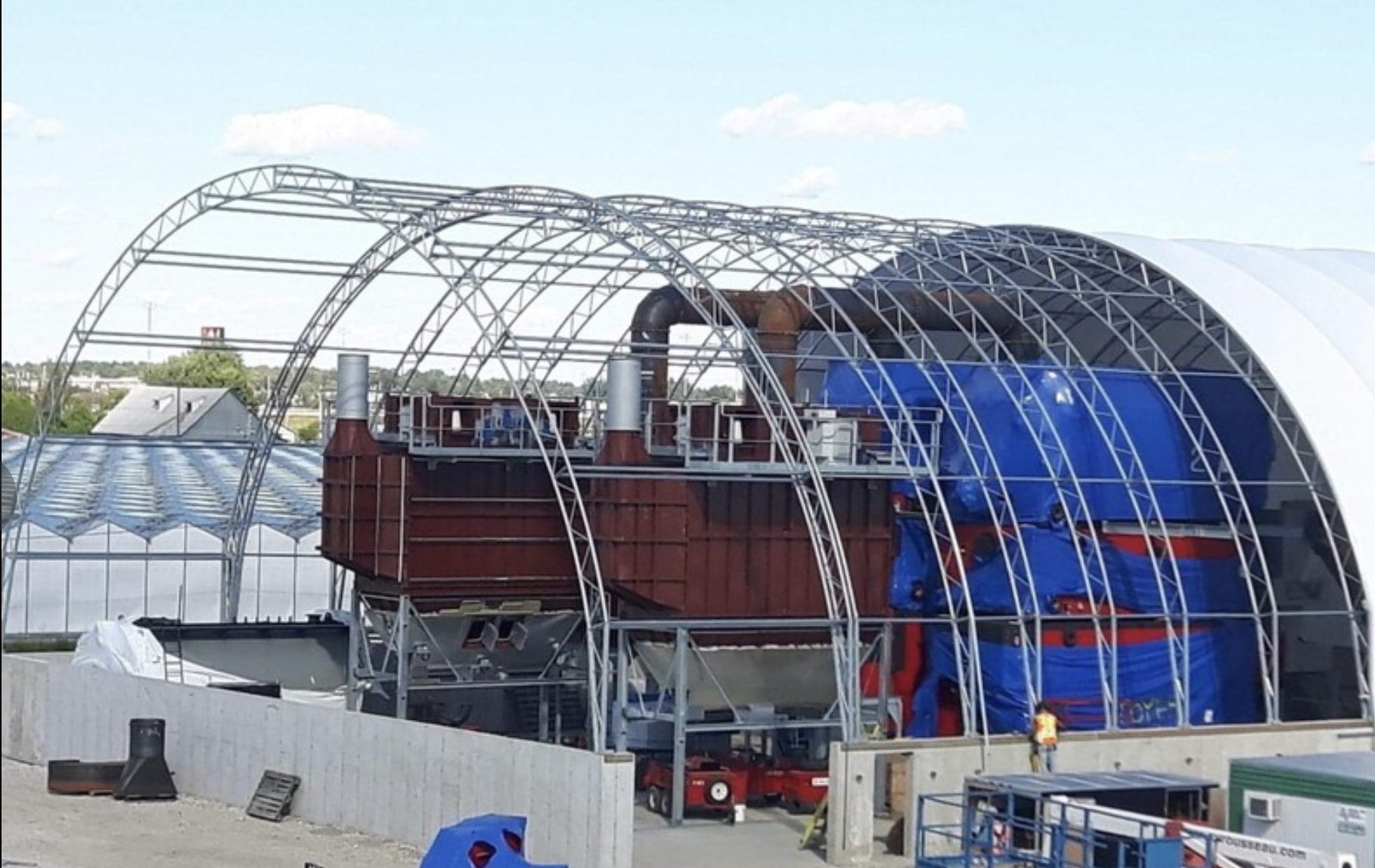
Eurodome galvanises its fabric building frames after fabrication, so welds, cut edges and bolt holes are coated as well as the main surfaces.
The zinc protects the steel in two ways. It acts as a barrier, and if it’s scratched, the surrounding zinc corrodes first to protect the exposed steel.
How long the coating lasts depends on its thickness and the conditions on site, such as road salt, coastal air and regular washdowns.
Regular checks around base plates and fixings help the frame last, and a sound frame can take a new cover when the old one wears out.
Road salt, coastal spray and damp conditions all attack a steel frame. Welds and cut edges are the parts most often left exposed when steel is coated before it’s fabricated.
At Eurodome, we hot-dip galvanise the steel frames of our fabric buildings after fabrication. The welds and cut edges get the same protection as the main steel, so the whole frame resists corrosion throughout its working life.
Molten zinc, bonded to the steel
Hot-dip galvanising means dipping fabricated steel components into molten zinc. The zinc bonds to the steel and forms a protective coating over every surface it reaches, including welds, edges and bolt holes. It can also coat the inside of hollow sections that are designed to let the zinc flow through.
Two kinds of protection in one coating
First, the coating forms a barrier between the steel and the air, water and salt around it.
Second, if the coating is scratched, the zinc around the damage corrodes first and protects the exposed steel. This is known as sacrificial protection. A small scrape from a loading shovel doesn’t leave bare steel open to rust.
Where galvanised steel earns its keep
At a highways depot, gritters bring salty water into the building after every winter maintenance run. At a coastal site, steelwork can be exposed to salt-laden air all year. Recycling facilities, waste transfer stations and industrial yards put frames through constant moisture and regular washdowns.
The life of the zinc coating depends on its thickness and the conditions on site. What you store, how often the frame gets wet and where salt or moisture can collect all feed into how we specify your building and plan its maintenance.
Keep an eye on the frame and the cover
Regular inspections help you spot coating damage early, along with any build-up of salt or debris around base plates and fixings. Clearing that build-up stops moisture sitting against the steel.
The tensioned fabric cover needs periodic checks too. When it reaches the end of its service life, we can fit a new cover to the existing frame, as long as the steelwork is still in good condition. A well-protected frame is a big part of how long fabric buildings last.
FAQs
Does galvanised steel rust?
Galvanised steel resists rust far longer than bare steel, but the zinc coating wears away slowly over time. How long it lasts depends on the coating thickness and the conditions on site.
What’s the difference between galvanising and painting steel?
Hot-dip galvanising bonds zinc to the steel, while paint sits on the surface as a film. If paint is scratched, the steel underneath is exposed. If a galvanised coating is scratched, the surrounding zinc corrodes first to protect it.
Why galvanise after fabrication rather than before?
Galvanising after fabrication coats the welds, cut edges and bolt holes as well as the main surfaces. Steel galvanised before fabrication is left with uncoated areas wherever it’s been cut or welded.
Can damaged galvanising be repaired?
Small areas of damage are usually repaired with a zinc-rich coating. If you spot damage on your frame, we can assess it and advise on the right fix.
Is a fabric building the only option for covered storage?
No. If you already have shipping containers on site, a container canopy spans the gap between them to create covered space. It’s relocatable and needs no groundworks.
Specify a frame that suits your site
Tell us what you need to store, how you use the space and what conditions the building will face. We’ll help you specify a building and a frame that suit your site and your day-to-day operations.
If you already have shipping containers on site, a container canopy could give you covered space faster. We’ll tell you which option fits best.
We design, manufacture and install fabric buildings, container canopies and timber dome structures for businesses and local authorities across the UK and Ireland. Based in Stirling, we’ve been doing it for over 40 years and have completed more than 180 UK installations. Our clients include National Highways and Morgan Sindall, and we’re accredited to CHAS, Constructionline Gold, IPAF, ISO 9001 and ISO 14001.
Call us on +44 1786 388 116 or request a quote and we’ll help you work it out.